

Share this post
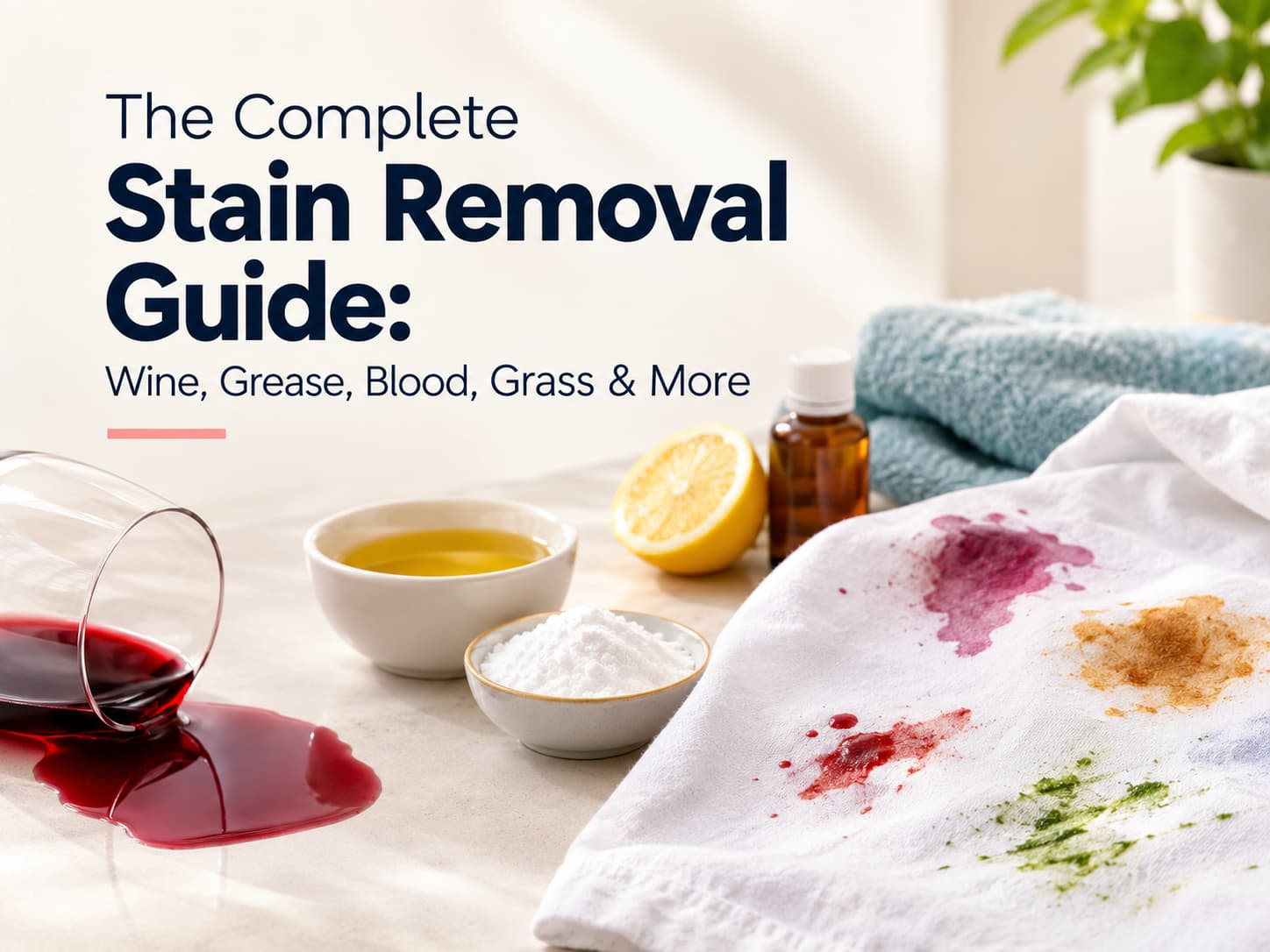
The Complete Stain Removal Guide: Wine, Grease, Blood, Grass & More
Most stain advice circulating online is either outdated or wrong for the fabric it's being applied to. Before reaching for a home remedy, it helps to know which stains actually respond to quick home treatment, and which ones need a professional's attention before they set permanently. This guide breaks down the most common stains by category, not by myth.

Why Stain Type Matters More Than Stain Age
Does every stain require the same treatment approach? No. Stains fall into three broad categories, protein-based (blood, dairy, sweat), oil-based (grease, makeup, and butter), and tannin-based (wine, coffee, grass, fruit juice), and each responds to a different approach. Using the wrong method, hot water on a protein stain, for example, can set it permanently rather than lift it.
Is it ever too late to treat a stain? Not necessarily, but the odds drop significantly once a stain has been through a hot dryer cycle, heat sets most stains permanently. Treating before drying, even imperfectly, beats waiting.
Wine Stains
Blot, never rub, with a clean cloth to lift excess liquid first. A cold water rinse from the back of the fabric pushes the stain out rather than through. Salt can absorb fresh wine on carpet, but on clothing it does little. For set-in wine stains, professional treatment has a meaningfully higher success rate than home remedies, especially on light fabrics or structured garments.
Grease and Oil Stains
Oil-based stains, cooking grease, motor oil, lotion, need a degreasing agent before washing; standard detergent alone often isn't enough. Dish soap applied directly and worked in before washing helps on cotton, but on delicate or dry-clean-only fabrics, the agitation required risks the garment itself. This is exactly the category where professional solvent-based cleaning outperforms a home attempt.
Blood Stains
Cold water only; hot water cooks the protein into the fibers permanently. Fresh blood typically lifts with cold water and a gentle protein-based stain remover. Dried blood requires more patience, soaking in cold water for an extended period before attempting removal.
Grass Stains
Grass stains contain both pigment (chlorophyll) and protein, which is why they're notoriously stubborn. Rubbing alcohol applied directly before washing helps break down the pigment on sturdy fabrics like denim or cotton play clothes. On anything delicate, this approach is too harsh.
Ink Stains
Rubbing alcohol works on many ballpoint ink stains, applied to the back of the fabric with a clean cloth underneath to absorb the lifted ink. Permanent marker and certain gel inks resist this entirely and typically require professional treatment.
When to Skip the Home Remedy Entirely
Structured or "Dry Clean Only" garments. Under the FTC's Care Labeling Rule, that tag means the fabric cannot reliably survive water and agitation. Applying a home stain remedy risks the entire garment, not just the stain.
Old or unidentified stains. Not knowing what caused a stain makes guessing the right treatment a gamble. A professional cleaner can often identify stain type by appearance and treat accordingly.
Anything already through the dryer. Heat-set stains need more aggressive treatment than a home remedy typically provides.
How LaundryMaids Handles Stubborn Stains
Every order is inspected before cleaning, with stains flagged and treated according to fabric type and likely origin. Wash and fold handles everyday stains on standard fabrics; dry cleaning, processed in-house using professional solvent-based cleaning, handles the rest. According to the Drycleaning & Laundry Institute, informing a cleaner of a stain's likely cause measurably improves removal outcomes, a simple step worth taking whether cleaning at home or sending it out.
Related Reading
- Understanding Dry Cleaning: A Guide for Fulshear (77441) Residents
- Maintaining Your Wardrobe in Cross Creek Ranch: Dry Cleaning Tips (77441)
- The LaundryMaids Pricing Page
Frequently Asked Questions
Can toothpaste really remove stains?
For a narrow range of stains, mostly scuff marks, toothpaste has mild abrasive and cleaning properties, but it is not a reliable general stain remover and can discolor certain fabrics.
Does vinegar remove all stains?
No. Vinegar works on some mineral and odor-based issues but does little against protein or oil-based stains, and can damage certain fabrics with prolonged contact.
Should I rub or blot a fresh stain?
Always blot. Rubbing pushes the stain deeper into fibers and can spread it to a larger area.
What stains are hardest to remove at home?
Old, set-in stains and anything that has been through a hot dryer cycle. Heat sets most stains permanently.
Is it worth sending a stained garment to a professional even for everyday fabrics?
For valuable or structured pieces, yes. The cost of professional treatment is almost always lower than replacing a ruined garment.
Don't Guess With a Stain That Matters
Some stains are a quick home fix. Others need a trained eye and the right process. When in doubt, a professional inspection costs nothing to request.
Schedule a pickup with LaundryMaids →
📍 27252 Katy Fwy., Ste. 1100, Katy, TX, 77494
📞 +1 832-281-4650
📧 laundrymaidsllc@gmail.com