
Share this post
Debunking the 5 Biggest Misconceptions About Dry Cleaning
Here's a question worth sitting with: when did you decide dry cleaning wasn't worth it? Was it the price you assumed it would be? Something you heard about the chemicals? The feeling that it was only for formalwear and special occasions?
Whatever the reason, there's a good chance it wasn't based on anything accurate. Dry cleaning is one of the most misunderstood services in garment care, and the myths around it are costing people pieces they genuinely loved. Here are the five biggest misconceptions, finally corrected.
Myth #1: “Dry Cleaning Uses Water”
The word “dry” in dry cleaning doesn’t mean there’s no liquid involved; it means no water. So how does dry cleaning work, exactly? Your garments are submerged in a liquid solvent, most commonly perchloroethylene (PERC) or newer biodegradable alternatives.
That solvent dissolves oils, grease, and most stains in ways water simply can’t, and it does it without causing the fiber damage for which water is responsible. The name stuck because, compared to water-based washing, the process stays “dry” for the fabric’s fibers.
Solvent vs. Water for Fabric Safety
Solvents and water behave very differently on fabric at the molecular level:
- Water molecules swell fabric fibers, which is what causes shrinkage, warping, and felting.
- Solvent molecules don’t penetrate the fiber structure the same way, leaving the fabric dimensionally stable.
- Delicate fabrics such as silk, wool, cashmere, and structured linings are engineered to repel water, not solvent.
Myth #2: “Dry Cleaning Is Only for Suits and Fancy Clothes”
Any garment with a “dry clean” or “dry clean only” label on the care tag belongs to the cleaner, regardless of how casual it is. That includes everyday blouses, lightweight sweaters, jackets, and fabrics such as rayon, silk, and acetate that would be wrecked in a washing machine.
There’s also a second category: garments without a dry clean label that have a stubborn stain that home washing didn’t fix. A professional dry cleaner has access to stain treatments and spotting tools that go well beyond what you’ll find in any laundry aisle.
Garments That Benefit From Dry Cleaning
- Structured blouses and shirts with pleats or boning
- Lightweight wool and cashmere knits
- Rayon and viscose dresses that lose their shape when wet
- Embellished or beaded pieces where water damages the trim
- Vintage garments where any agitation is a risk
Myth #3: “Dry Cleaning Shrinks or Damages Clothes”
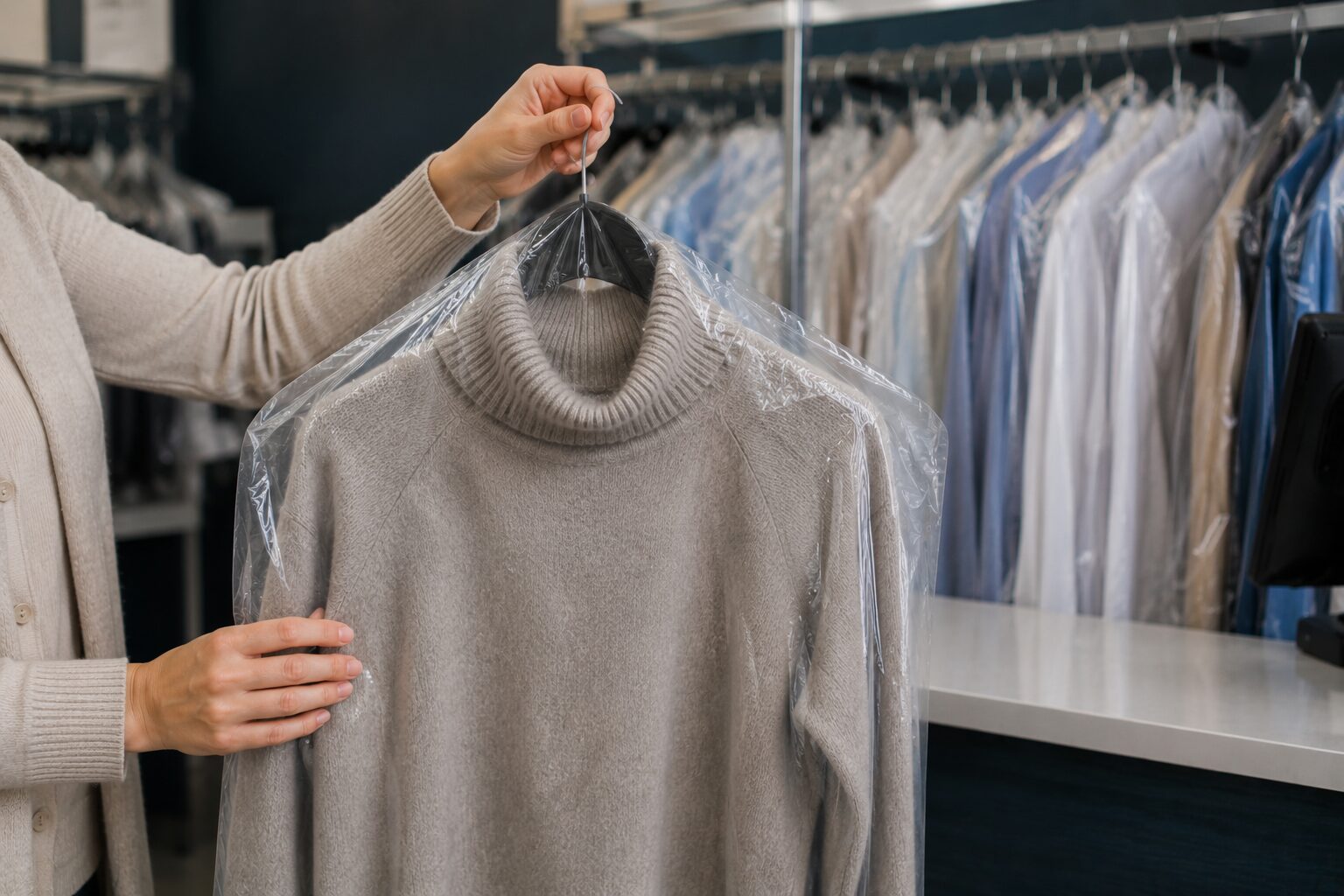
This is probably the fear that sends the most people to the “hand wash cold” cycle instead of the cleaner. And it’s understandable. If something went wrong with a garment after dry cleaning, it sticks in your memory.
But here’s what most people don’t know: shrinkage, color bleeding, and fiber damage are water problems. They happen when you wash fabrics in a machine that wasn’t made for it. This is one of the most persistent common misconceptions about dry cleaning, and the evidence runs the other way.
Professional dry cleaning is actually less likely to damage delicate fabrics than home washing, because solvents don’t swell fibers, and a trained cleaner inspects each garment before and after the process.
The rare cases of damage traced back to dry cleaning usually come down to two things: (1) improper solvent handling at a low-quality facility, or (2) outdated equipment that’s overdue for replacement.
What Actually Causes Garment Damage at the Cleaners
- Worn-out or poorly calibrated equipment that applies too much heat during finishing
- Incorrect solvent concentration or temperature settings
- Skipping the pre-inspection step, which identifies vulnerable trims, dyes, or embellishments
- Rushing the drying cycle, which can cause residual solvent to concentrate unevenly
None of these is inherent to dry cleaning as a method. They’re signs of a facility that’s cutting corners.
Myth #4: “You Need to Dry Clean After Every Single Wear”
This one actually hurts the garments more than it helps them. Repeated dry cleaning, even with quality solvents, does put cumulative stress on fabric fibers over time. If you dry clean a blazer after every single wear, you shorten its life, not extend it.
For most garments worn in a clean office or social setting, three to five wears is a reasonable window between cleanings, assuming the garment is properly aired and hung after each wear.
The actual triggers for a cleaning are:
- Visible stain
- Noticeable odor (perspiration or environmental)
- Worn in a humid, dusty, or high-contact environment
- The three to five wear mark has been reached
How to Extend Time Between Dry Cleanings
- Hang garments immediately after wearing; don’t leave them folded or in a pile
- Use a fabric brush on wool and structured pieces to remove surface debris
- Air out garments before returning them to the closet, especially after a warm or humid environment
- Spot-treat small stains before they set, and take in those pieces before the smell follows
Myth #5: “All Dry Cleaners Are Basically the Same”
When people assume all providers operate similarly, price or proximity becomes the only deciding factor. That logic works fine for commodities. It doesn’t work for someone who needs to trust a professional with a $400 blazer or a wedding dress.
The difference between a quality and an average dry cleaner shows up in things you won’t see until it’s too late: how they inspect garments before cleaning, which solvents they use and how recently their equipment was serviced, how they communicate about potential risks, and the skill level behind the finishing press.
For residents in Katy, Texas, that distinction is worth paying attention to. A provider that cuts corners may technically return your clothes clean, but the finish, the structure, and the longevity of the fabric will reflect exactly how much care went into the process.
What to Look for in a Dry Cleaner Worth Trusting
- Pre-cleaning inspection: they examine every garment for fabric type, dye sensitivity, and trim before it goes in
- Updated equipment: they properly maintain machines with calibrated solvent concentration and heat settings
- Clear communication: they tell you up front if a stain may not fully come out or if a fabric has risk factors
- Quality finishing: the pressing and steaming work at the end is what gives a garment its shape back; it’s skilled work, not an afterthought
Bring In the Pieces You've Been Afraid to Wash – Laundry Maids Know Exactly What to Do
Understanding how dry cleaning works is a good start. Handing your garments to a team that actually executes it well is the real payoff.
At Laundry Maids, we offer professional dry cleaning with fast turnaround, same-day availability, and a pickup and delivery option that fits into your schedule instead of the other way around. We're a family-owned business in Katy, Texas, and quality from start to finish isn't something we tack on – it's how our whole process is built.
Book a dry cleaning Pickup and Delivery Service today. Our team is just a click away!
Contact Us: