


Share this post
Your First Dry Cleaning Visit: What to Expect at Every Step
The first time you walk into a dry cleaner with a garment in hand, there's a moment where you're not sure what's expected of you. Do you mention the stain or wait for them to find it? Should you say anything about the fabric? Is there a right way to hand things over?
There is, and it's simpler than it sounds. Here's exactly what happens at every step of a dry cleaning visit, from the moment you walk in to the moment you leave with your clothes.
Step 1: Bringing In Your Clothes: What to Have Ready and What to Mention
You don’t need to do anything special before you arrive. No special prep, no labeling, no ironing. Just bring the garments. That said, a few things at drop-off will make a real difference in how your clothes come back.
What to say at the counter (and why it matters)
Tell the person at the counter anything you’ve noticed about the garment. They’re asking because this is the start of how dry cleaning works. Every treatment decision traces back to this first conversation.
- Point out stains you’re aware of, even if you don’t know what caused them. The type of stain changes the treatment approach.
- Mention any buttons that are loose or fabric that’s already worn. This gets documented and protects you.
- Give them a pickup deadline if you have one. Most cleaners have a standard turnaround, but rush jobs can usually be arranged.
- Bring clothes on a hanger or neatly folded in a bag. It won’t change the result, but it makes the intake faster.
If you’re not sure if something is a stain or just part of the fabric, say so anyway. Let the professional decide.
Step 2: The Intake Inspection: What the Cleaner Checks Before Accepting Your Order
Before your clothes leave the counter, a professional cleaner looks at each piece individually. This isn’t a formality, it’s a real inspection, and it usually happens right in front of you.
Why this inspection protects you as the customer
The cleaner looks for four things during intake:
- Care label. The label tells them which solvents are safe, what temperatures the fabric tolerates, and whether pressing is recommended. A cleaner who skips this is guessing.
- Stain locations. They note what you pointed out and check for anything you might have missed, especially on the back, collar, and cuffs.
- Existing damage. Tears, thinning fabric, missing buttons. These get documented on your ticket, so there’s no confusion about what arrived vs. what was caused during cleaning.
- Structural details. Beading, sequins, lining, or any embellishment that needs extra handling.
When this gets documented on your claim ticket, both parties have a clear record. If a cleaner rushes through this step or skips it entirely, that’s a reason to pause.
Step 3: What Happens Behind the Counter
Once the ticket is written, your clothes go into the back. Garments are sorted by fabric type and color, then treated for any stains identified at intake. After that, they go into a cleaning machine, not a washing machine, that uses a liquid solvent instead of water.
This is what makes it dry cleaning: the solvent dissolves oils and residues without saturating the fabric fibers the way water does. After the cleaning cycle, the machine drains the solvent, and the clothes come out nearly dry. They’re inspected again for any stains that didn’t fully release, and if needed, treated again before moving on.
What The Solvent Actually Does
Water swells fabric fibers and can shrink, stretch, or distort delicate materials. Solvent doesn’t do that. It lifts grease, oil stains, and embedded residues cleanly, which is why dry cleaning is the right call for structured garments such as suits, formalwear, and anything with interfacing.
You don’t need to understand chemistry. You just need to know your clothes aren’t going through a regular wash cycle.
Step 4: Pressing and Finishing: Where the Visible Quality Happens
The cleaning machine handles the dirt. Pressing handles everything you can see. This step takes as long as the cleaning itself, sometimes longer. Each garment is shaped and pressed by a finisher who works piece by piece, using steam, hand irons, and form presses to restore the garment to its intended shape.
What A Finisher Actually Does That A Home Iron Can’t
A home iron works flat against fabric. Commercial finishing equipment works in three dimensions. It fills the inside of a sleeve or shoulder and presses outward from within, which is how you get a collar that sits the right way and a jacket lapel that lays flat without creasing.
- Collars are shaped around a collar press, not ironed flat.
- Trouser creases are set with a hot press and steam, not a home iron on a board.
- Suit jackets are finished in a form that inflates to match the shoulder shape.
Delicate fabrics are steamed from a distance rather than touched with a hot plate.
When people say dry cleaned clothes look different from home laundered items, this is the step they’re reacting to. The quality you pick up is mostly the finisher’s work.
Step 5: Picking Up: What to Check Before You Leave the Counter
Pickup is quick, but don’t skip it. A thirty-second check at the counter is much easier than coming back for another press.
Your pickup checklist
Run through these steps before you hand over your claim ticket and leave:
- Count your garments against the ticket. One suit can come back as separate pieces, jacket and trousers, so count by item, not by bag.
- Check for remaining stains in good light before you accept. Hold up the garment, check the collar, underarms, and anywhere you pointed out at drop-off.
- Look at the pressing. Are creases sharp? Does the collar sit flat? Is the lining smooth?
- Check buttons and closures. Reputable cleaners replace minor buttons as part of service, but confirm anything loose at drop-off.
If something isn’t right, mention it before you leave. Most dry cleaners will press again or treat again at no charge if you catch the issue at pickup. Walking out and coming back a day later makes it harder to resolve.
If you’re searching for dry cleaning in Katy, Texas, look for a cleaner with a clear pickup policy and one that encourages you to inspect before you leave. That’s the sign of a shop that stands behind the work.
Skip the Extra Trips: LaundryMaids Offers Pickup, Cleaning, and Delivery in One
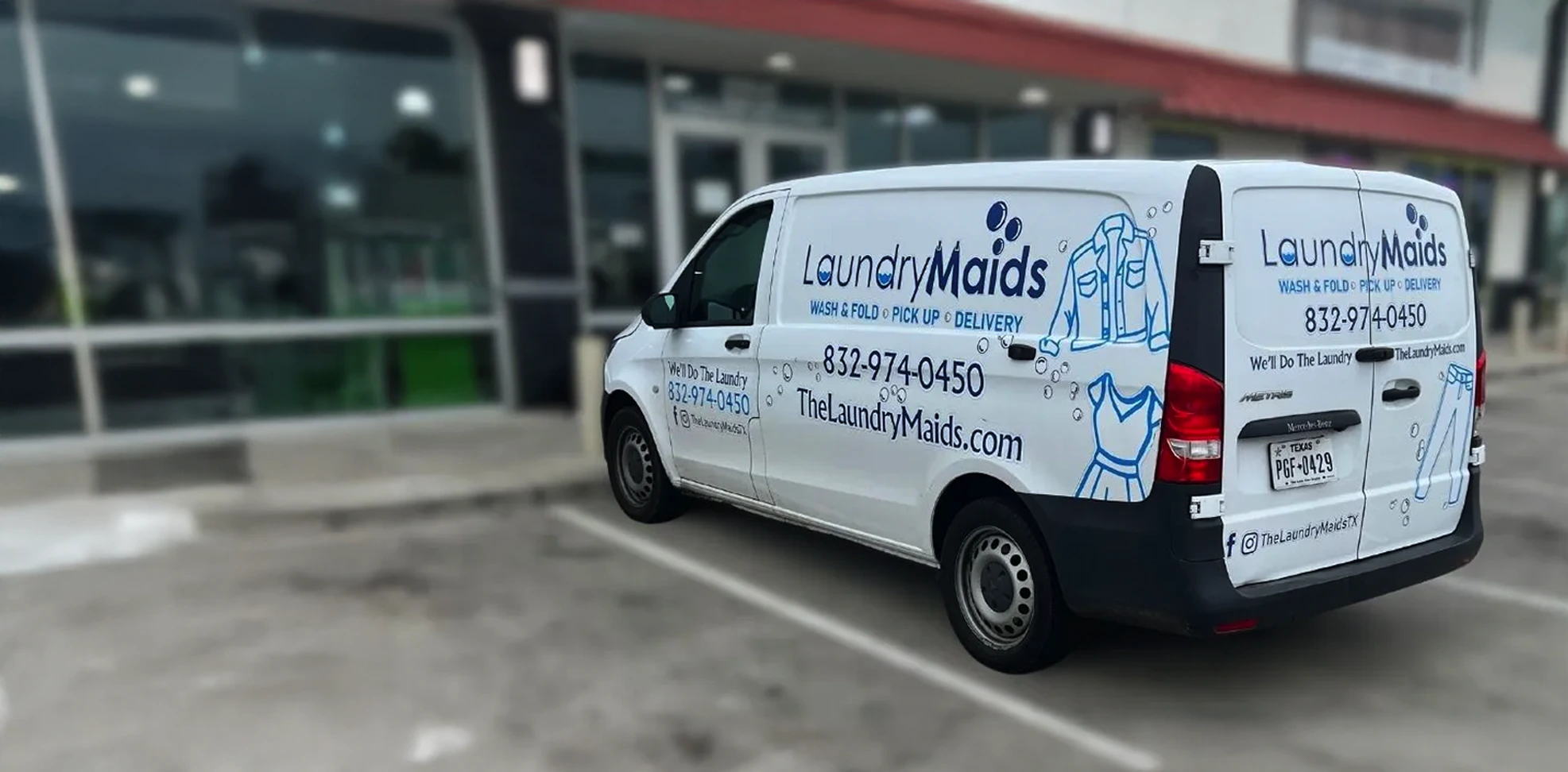
Now that you know what to expect at every step, the only thing left is deciding where to go. Your first dry cleaning visit doesn’t have to involve extra planning or multiple drives across town when pickup and delivery are already part of the service.
At LaundryMaids, we handle dry cleaning for both everyday and specialty garments right here in Katy, Texas. Every order is reviewed carefully, customer requests are always welcomed, and same-day service is available when you need a faster turnaround.
From the moment we pick up your clothes to the moment they’re back in your hands, everything is managed locally by our team. No handoffs. No guesswork.
Scheduling takes less than a minute. Reach out, and we’ll take it from there.
📍 Address: 27252 Katy Fwy., Suite 1100, Katy, TX, 77494
📞 Phone: +1 (832) 966-7164
📧 Email: laundrymaidsllc@gmail.com